
Every parent wants the best for their kids, including their smile. Deciding when to schedule your child’s first orthodontic evaluation can be a confusing process. Orthodontic care goes beyond just straightening teeth. It helps to build a strong base for healthy teeth and gums. By knowing the signs and symptoms for this check-up, you can save your child from big dental issues. In this blog, we will discuss the key indicators that your child might need a dental evaluation and explain why early action makes all the difference.
Signs to Watch in Early Dental Development
It is important to keep an eye on your child’s development. Noticing certain signs during early dental growth can help guide proper treatment and prevent future complications. Here are important indicators that a professional evaluation might be helpful:
- Early or Late Loss of Baby Teeth
Losing baby teeth too early or too late indicates an underlying orthodontic issue. The normal timeline for baby teeth loss is that permanent teeth have enough space to grow in properly.
If your child’s teeth don’t follow this pattern, it may lead to crowding, misalignment, or bite problems. An orthodontist can assess whether intervention is needed to guide proper development and prevent future complications.
- Difficulty Chewing or Biting
Children who struggle to chew or bite food may have jaw misalignment or bite issues. This can make eating uncomfortable and may even impact nutrition.
Early orthodontic evaluation can identify these problems. It allows timely solutions that improve both oral function and overall well-being. Addressing these issues early can also reduce the need for more complex treatments later.
- Crowded or Misplaced Teeth
Crowded, crooked, or overlapping teeth are common reasons for such check-ups. It can make cleaning teeth difficult, increasing the risk of cavities and gum disease. Early intervention can simplify future treatments and support better oral hygiene.
- Mouth Breathing
Frequent mouth breathing, especially at night, can be a sign of jaw or bite problems. Mouth breathing may lead to dry mouth, increased risk of cavities, and even changes in facial development.
An orthodontist can help identify the root cause and recommend solutions to promote healthier breathing and jaw growth.
- Thumb Sucking or Other Oral Habits
Prolonged thumb sucking or use of a pacifier beyond age four can affect jaw growth and tooth position. These habits may lead to open bites, protruding teeth, or other alignment issues.
Early evaluation can help break these habits and guide proper oral development.
- Jaws That Seem Out of Proportion
If your child’s jaws appear too far forward, too far back, or asymmetrical, it could indicate skeletal issues.
Early detection allows experts to use growth to their advantage. It potentially reduces the need for surgery or extractions in the future. Addressing these concerns early can also improve facial aesthetics and function.
- Difficulty Speaking Clearly
There are so many difficulties in speech that are caused by dental alignment, such as lisping or trouble pronouncing some sounds.
It is determined by a proper, detailed evaluation if misaligned teeth or jaws are contributing to these challenges. This allows for focused treatment that supports both speech and dental health.
Over 88.7% of children in certain populations show a need for interceptive or preventive orthodontic treatment by age 7.
Benefits of Early Evaluation
Early evaluation plays a key role in maintaining healthy teeth and a comfortable bite. It helps catch problems before they get worse and makes treatment easier and more effective.
- Detects bite, alignment, and jaw growth problems before they become severe.
- Early intervention can reduce the complexity and cost of later treatment.
- Timely care can create space for permanent teeth, reducing the need for extractions.
- Proper alignment makes brushing and flossing easier, lowering the risk of cavities and gum disease.
- Early care can also improve self-esteem by addressing appearance concerns sooner.
When to Schedule a Consultation
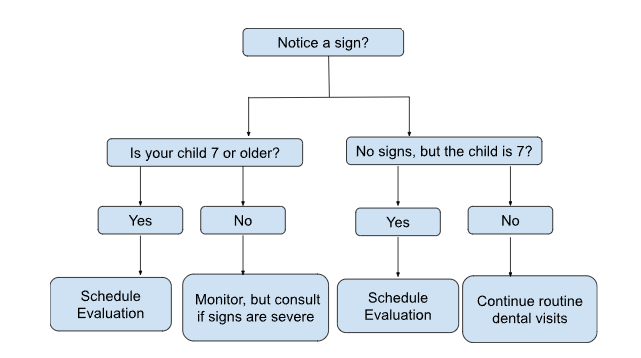
Here’s a helpful flowchart to guide you on when to schedule an orthodontic evaluation. It breaks down the decision process based on your observations and your child’s age.
How Does Early Teeth Care Affect Well-Being?
Early teeth care improves overall oral health by reducing the risk of cavities, gum problems, and jaw pain. It also makes daily cleaning easier and helps build confidence with a healthy, attractive smile.
Without early attention, kids may experience more discomfort and a lower quality of life. Timely care helps prevent these issues and supports their comfort and happiness.
Parents play a vital role by understanding the importance of early dental checks. Acting early helps children avoid complicated and costly treatments later, leading to healthier smiles and better well-being.
Final Thoughts
Early orthodontic evaluations are a proactive step towards your child’s lifelong oral health and confidence. By scheduling a check-up by age 7, you are giving your child the best chance at a healthy, beautiful smile and potentially avoiding more complex dental issues in the future. If you notice any of the signs, reach out to Artful Orthodontics in Winter Garden, FL, for a professional evaluation. Our expert team is dedicated to providing personalized, state-of-the-art orthodontic care to support your child’s dental development every step of the way.
FAQs
At what age can children start wearing orthodontic appliances like braces or aligners?
Children typically begin orthodontic treatment with braces or clear aligners once most of their permanent teeth have erupted, usually between the ages of 9 and 14. However, the exact timing depends on individual dental development and the orthodontist’s recommendations. Early evaluations, often around age 7, help determine the best time to start treatment to maximize effectiveness and comfort.
Will my child need braces immediately after their first evaluation?
Not always. The first orthodontic evaluation is often about monitoring your child’s growth and dental development. Many children enter a “watch and wait” phase where the orthodontist observes changes before recommending treatment. Early assessment makes sure that any necessary intervention happens at the optimal time.
How can I prepare my child for their first orthodontic visit?
Preparing your child involves explaining what to expect during the appointment calmly and positively. Reassure them that the visit is just a check-up and that the orthodontist’s office is a friendly place. Encouraging your child to ask questions and bringing along a favorite toy or book can also help ease any anxiety.